

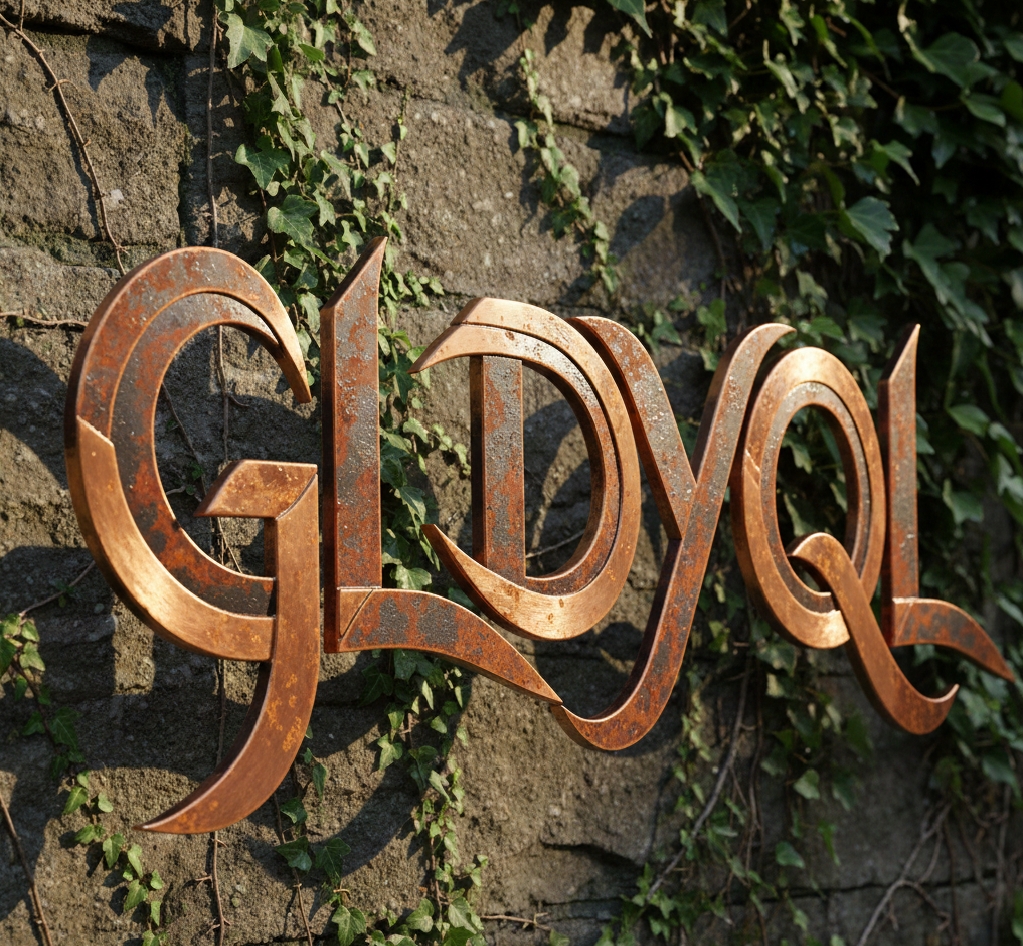
You don’t have to spend long online before you stumble across something like GLDYQL—a strange cluster of letters that looks like it should mean something, yet doesn’t immediately map to any familiar word, brand, or acronym. Maybe you saw it in a search box, a comment section, a URL, a random tag, an analytics report, or an odd-looking page title. Your brain does what brains do: it tries to turn noise into signal.
And that’s exactly why terms like GLDYQL are worth writing about.
This article treats GLDYQL as what it most reliably is in the real world: a mystery string. Not a confirmed technology, not a standardized concept, not a universally recognized label—but a useful example of how random-looking tokens can become “real” on the internet through repetition, copycat publishing, search behavior, and (sometimes) spam.
1) Why GLDYQL feels meaningful even when it isn’t
Humans are pattern-finders. We see faces in clouds, hear messages in static, and assume that if something is present and repeated, it must be important. Online, that instinct gets reinforced because the web is full of signals that mimic authority:
- A page ranks on Google, so it feels legitimate.
- Multiple sites mention a term, so it feels established.
- The writing sounds confident, so it feels researched.
But on the internet, visibility is not the same as validity.
A string like GLDYQL can appear in dozens of places for reasons that have nothing to do with a real definition. It can be a placeholder, a test value, an autogenerated slug, a tracking artifact, or an SEO lure. Once a few pages exist, more pages get written to “explain” it—sometimes because people are curious, and sometimes because content farms exploit that curiosity. The result is a loop where “meaning” gets manufactured after the fact.
2) Where strings like GLDYQL come from
Let’s break down the most common origins of mystery strings. GLDYQL could plausibly fit into any of these categories depending on where you found it.
A) Placeholder text and test data
Developers and content creators constantly need dummy values:
- to test forms (“does the input save correctly?”),
- to test search (“does indexing work?”),
- to test display (“does the layout break with short strings?”).
Random letters are useful placeholders because they’re unlikely to collide with real terms. The problem is that test data sometimes escapes into production or gets indexed by search engines. A staging page becomes public. A draft post gets published. An internal tag becomes visible. Suddenly a placeholder becomes a searchable “thing.”
B) Autogenerated content and slugs
Modern websites generate a lot automatically:
- URLs,
- tags,
- internal IDs,
- query parameters,
- filenames,
- cache keys.
Sometimes those generated strings leak into visible places—page titles, headings, metadata, or navigation—especially on poorly maintained sites or sites stitched together from templates.
C) Spam patterns
Spam thrives on randomness. Attackers and spammers generate unique strings for a few reasons:
- to evade filters that look for repeated phrases,
- to produce endless variants of the same junk,
- to create “unique pages” that search engines might index,
- to hide malicious or irrelevant content under obscure URLs.
A nonsense string is perfect for this: it’s unique, it doesn’t trigger obvious keyword blocks, and it can be inserted anywhere.
D) “Curiosity capture” publishing
There’s also a softer, less sinister explanation: people search weird terms, and someone writes content about them because it’s easy.
A template-driven article can take any string and wrap it in vague language:
- “This term is emerging…”
- “It’s used in digital systems…”
- “It has many interpretations…”
- “It may represent a concept in technology or creativity…”
That kind of writing can sound plausible while remaining untestable. The term gains “definition” not through real usage, but through the appearance of explanation.
3) How search engines help mystery strings spread
Search engines are mirrors. They reflect what exists on the web and what people ask for. If a term like GLDYQL shows up in a few places, curious users search it. Those searches can cause:
- more pages to be created (“what is gldyql?” content),
- more indexing,
- more ranking competition,
- more visibility.
This doesn’t require a conspiracy. It’s a natural outcome of the incentives:
- Users want answers.
- Publishers want traffic.
- Search engines want results.
The internet often fills empty space with something, even if the “something” is mostly recycled ambiguity.
4) The two main ways people interpret GLDYQL
When people encounter GLDYQL, they tend to interpret it in one of two directions:
Interpretation 1: “It’s a concept I haven’t learned yet”
This is the optimistic reading. Maybe GLDYQL is:
- a new framework,
- a niche acronym,
- an internal project name,
- a community shorthand term.
Sometimes that’s true for other strings. But if you can’t find a clear origin—like an official project page, documentation, or a credible community history—this interpretation should remain tentative.
Interpretation 2: “It’s random or suspicious”
This is the cautious reading. If GLDYQL appears in:
- unsolicited emails,
- sketchy ads,
- pop-ups,
- strange redirects,
- unknown domains,
- odd analytics referrers, then it’s smarter to treat it as a warning sign rather than a new vocabulary word.
In many real-world cases, the context determines which interpretation is correct. The same string can be harmless in a developer’s test environment and risky in a phishing link.
5) What to do if you encounter GLDYQL
Here are practical steps that apply to GLDYQL and any similar mystery string.
If you saw it while casually browsing or searching
Treat it like internet trivia:
- Don’t assume it’s important just because it appears in results.
- Prefer sources that cite concrete references.
- Be skeptical of pages that “define” it without showing where the definition came from.
A good rule: if an article can’t tell you where a term originated, it’s not really explaining it—it’s filling space.
If you saw it in a link, email, or message
Switch to safety mode:
- Don’t click if you don’t trust the sender.
- Hover over links (on desktop) to preview the real destination.
- Avoid entering passwords or personal data after following unusual links.
- If you already clicked, close the tab and run a quick security check (browser updates, malware scan, password hygiene).
Mystery strings are often used in campaigns because they look “technical” and can bypass casual skepticism.
If you’re a website owner and found it in analytics, URLs, or pages
This is where it matters most.
- Check whether it’s a referrer spam artifact.
Some bots send fake traffic with weird referrers or parameters to get you to visit their sites. - Search your own site for the string.
If GLDYQL appears in your page titles, blog posts, or newly created URLs and you didn’t put it there, treat it as a potential compromise or injection. - Review recent changes.
Look for new plugins, new admin accounts, theme edits, or files uploaded unexpectedly. - Harden access.
Rotate passwords, enable MFA, update software, and scan for malware if anything looks off.
Even when a weird string isn’t malicious, it can signal weak maintenance or an indexing issue you should fix.
6) Why “complete definitions” can be misleading here
It’s tempting to end with: “GLDYQL stands for ____.” But inventing a definition would be dishonest. The most “complete” and accurate truth is:
- GLDYQL is best understood as an example of how the internet manufactures meaning around obscure strings.
- It may be used as a placeholder, autogenerated token, SEO bait, or spam artifact depending on context.
- Without a traceable origin, treating it as a fixed concept is less useful than treating it as a signal to check context and credibility.
That’s not unsatisfying—it’s realistic. And it actually gives you power: instead of memorizing a dubious definition, you learn a method for evaluating any similar term.
7) The bigger lesson: how to stay grounded online
The web rewards confident storytelling. It also rewards speed and volume. That combination creates an environment where vague explanations can spread faster than verified ones.
So when you see GLDYQL—or the next mystery string—remember:
- Repetition doesn’t equal truth.
- Ranking doesn’t equal authority.
- Confidence doesn’t equal evidence.
- Context is everything.
If GLDYQL is just something you typed into a search bar, it’s probably harmless noise dressed up as intrigue. If it appears inside a link you didn’t ask for, or on pages you didn’t create, treat it as a prompt to verify your environment—not as a new concept to adopt.
In a world where the internet can make anything look real, the safest skill isn’t knowing every term—it’s knowing how to tell when a term has earned its meaning.
Conclusion
GLDYQL doesn’t need a perfect definition to be useful. Its value is in what it reveals: the internet can turn random strings into “topics” through repetition, templates, and curiosity-driven clicks. When you see a term like this, don’t rush to adopt a meaning—trace the context. If it’s just a stray keyword in search results, it’s likely harmless noise. If it appears in unsolicited links, suspicious emails, strange redirects, or unexplained pages on your site, treat it as a prompt to verify legitimacy and security. In a web that can manufacture authority overnight, your best defense is simple: evidence over confidence, context over assumptions.
